Across Bangladesh's river deltas, traditional wooden passenger boats are getting a clean-energy upgrade. Solar panels mounted on bamboo canopies now power electric motors and onboard batteries, cutting reliance on diesel for communities where roads are often unusable and grid power is scarce.
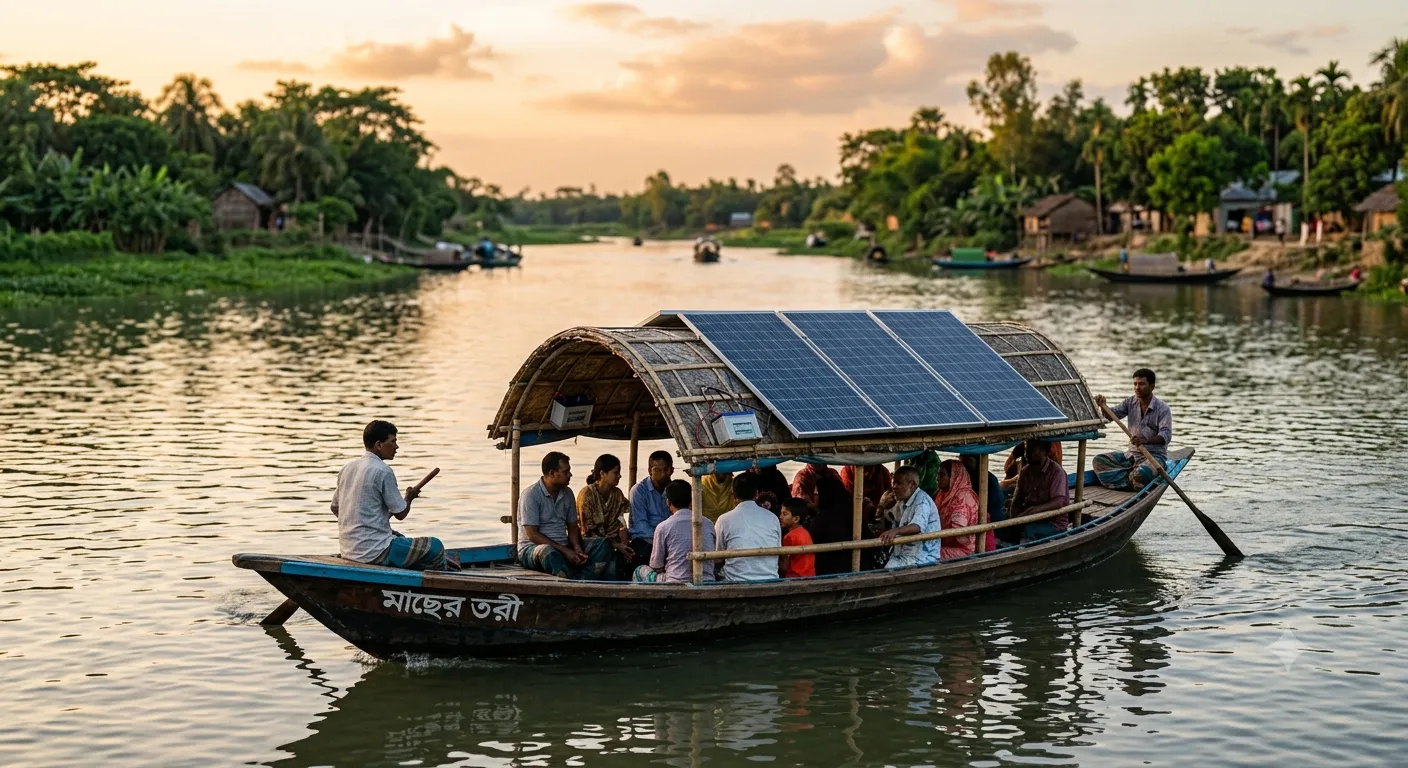
These hybrid boats do more than move people. Stored solar energy can charge phones and small devices for passengers and riverside households, turning each vessel into a mobile micro-power source.
Why It Works
- Abundant local sunlight: Makes solar energy a reliable daily resource.
- Lower maintenance: Electric motors generally require less maintenance than diesel engines.
- More predictable operating costs: Boat operators can reduce their dependence on fluctuating fuel prices, which is especially valuable for low-margin businesses.
- Works alongside existing solar infrastructure: The model complements Bangladesh's existing solar home system programs, extending renewable energy into communities connected by waterways.
More Than Transportation
As battery costs continue to fall, solar-electric boats could become more than an alternative to diesel-powered transportation. Their ability to generate, store, and share electricity gives them the potential to serve as small, mobile energy hubs for people living along Bangladesh's waterways.
The broader lesson is simple: renewable energy doesn't always require new infrastructure. Sometimes, it only requires smart adaptation of the infrastructure and traditions communities already rely on.