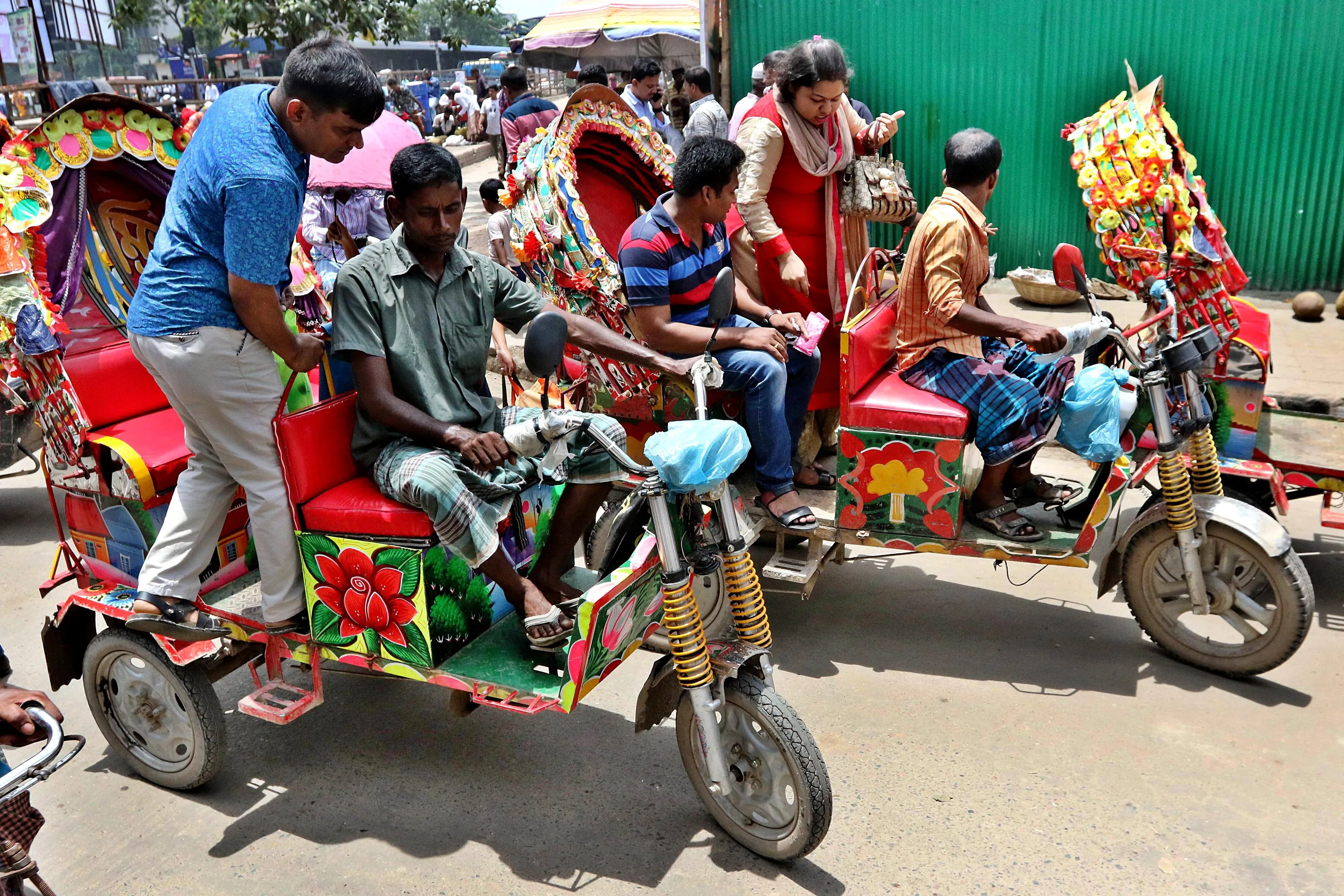
Long before EVs became a global policy focus, battery-powered rickshaws were already electrifying daily transport across Bangladesh and India. These "easy bikes" swap pedal power for electric hub motors and rechargeable batteries, retaining their colorful, hand-painted design while cutting emissions.
Why They Matter
- Affordable electrified transport: Provides low-cost transportation options for low-income drivers and passengers.
- Cleaner urban air: Helps reduce street-level air pollution in densely populated cities.
- Growing electricity demand: Creates rising overnight electricity demand, with charging increasingly linked to solar-powered electricity in some areas.
- Higher driver income: Electric rickshaws can increase daily passenger capacity, creating the potential for higher earnings for drivers.
Challenges and Emerging Solutions
Charging infrastructure still lags behind fleet growth, with many rickshaws relying on informal household charging and aging lead-acid batteries.
Battery-swapping stations and a transition toward lithium-ion batteries are emerging as potential solutions, offering faster charging and improved battery performance.
Electrification From the Ground Up
Battery rickshaws prove that electrification can scale from the ground up. Rather than requiring an entirely new vehicle category, communities can build on the transport systems people already depend on through smart retrofits, accessible charging, and better battery technology.